
How a Change of Scenery Can Solve Your Team’s Creative Burnout
You don’t see creative burnout coming. You see slower response times, meetings that lead to nothing, and a team that’s physically there but mentally elsewhere. You can’t fix that with a team-building weekend or a pep talk. Sometimes the solution is as straightforward, and as intentional, as changing the environment.
Giving Teams the Autonomy to Choose
A key factor to prevent burnout that is often overlooked is giving employees the freedom to choose their workspace, where they feel they can be most productive during a particular day. For instance, if hot-desking is implemented in a common working space, individuals can opt to work in a silent corner for focusing on their tasks in the morning, and then choose a more social table for their creative group work in the afternoon.
This benefit is not merely a convenience. Studies have shown that this drives retention. When employees believe that they can control and adapt their environment based on their needs, they express higher levels of job satisfaction and are more likely to stay. For managers who are now responsible for hybrid teams following the pandemic, this is a cheaper and more effective method of retention than most alternatives.
One more advantage of this approach is that the first step is much easier for companies to pilot than they might think. Options like shared office space mn allow companies to get a true feel with limited risk or investment. No need to commit to a long commercial lease or pay for new equipment, just sign up with your team and try it for a month. Then see whether they were all more productive.
Why Familiar Spaces Stop Working
Our brains are wired to recognize patterns. While this is mostly advantageous, it can be detrimental in a work environment because your nervous system begins to link that physical space with a specific mental or emotional state. If that state is "stressed and stuck", the physical stress or sense of being trapped in your environment will become a trigger.
This is the loop most remote workers are unaware of. The home office that once felt freeing now feels like "work anxiety". The response isn’t "I don’t want to work, I’m too lazy", the response is conditioning. Your brain feels stressed every time you sit in that spot to do work, worrying about the next deadline. So of course, it makes you want to avoid that.
Cognitive flexibility, the brain’s ability to shift from thinking about one concept to another, is easier if there is a difference in the context. New environments can do this because they introduce new visual, auditory, and social contextual cues. The concept of "use it or lose it" is also very real. The brain will re-wire itself to more easily switch when you force it too. Physically moving to a different location can actually help set up new thinking patterns.
The Problem With the Home Office and the Traditional Cubicle
Creative burnout is often driven by professional isolation, but we rarely talk about that. When you work from home for weeks on end, you lose the "ambient social" that makes creative ideas feel worth having. No one is there to overhear you make some excited utterance. No one’s conversation distracts you with the exact answer you needed while you were stuck on a problem.
Of course, the traditional office is just as bad at creating that kind of social interaction. The Sensory Deprivation Chamber under the fluorescent lights does not scream "creative energy." It screams "your next great idea will be to the exact specifications you are given."
Serendipitous interaction, those unplanned conversations that produce real professional value, is almost entirely absent in both settings. It needs a certain kind of space to happen.
What the "Third Space" Actually Does
The concept of a third space, somewhere that’s neither home nor a formal office, has been discussed in urban planning for decades. For creative teams, it’s less about aesthetics and more about the absence of accumulated stress signals.
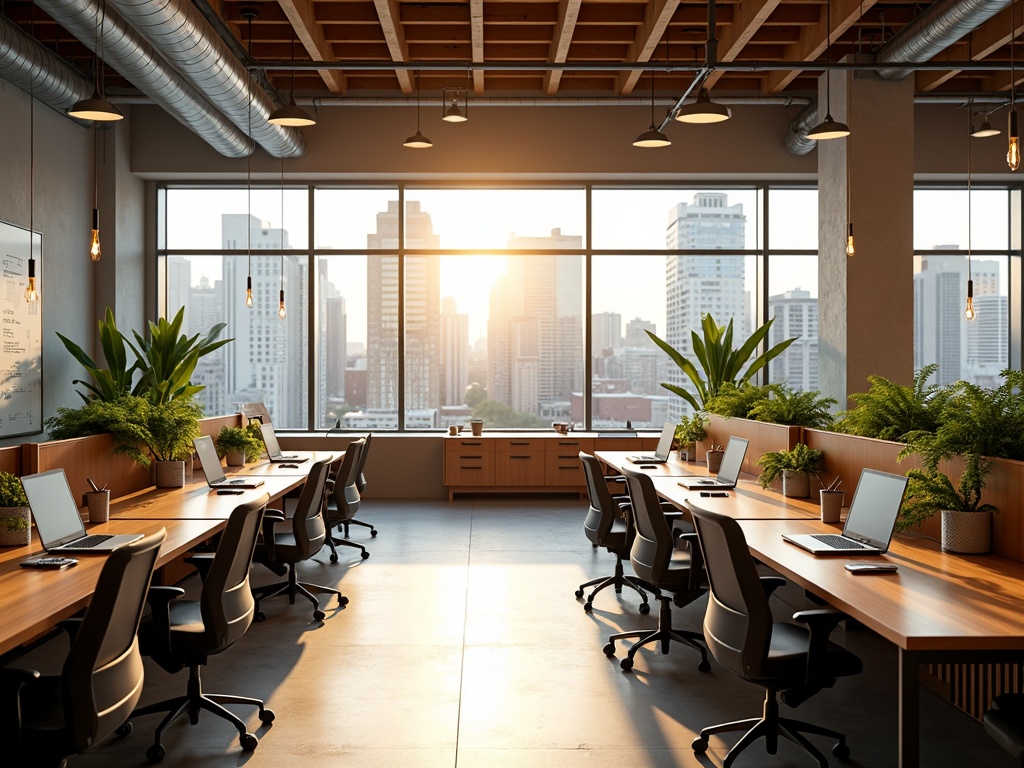
A well-designed shared workspace sits in a specific psychological sweet spot. It’s structured enough to signal "this is work time," but neutral enough that the brain doesn’t carry the emotional weight it associates with a familiar desk. Biophilic design elements, natural light, plants, varied ceiling heights, reduce cortisol and help people settle into focused work faster than they would in a stripped-back corporate environment.
There’s also what you might call community energy. Seeing other people in a state of genuine deep work is a form of social contagion. It’s not about competition. It’s about permission. Watching focused people makes focus feel normal and accessible.
Moving From Burnout to Output
Experiencing creative burnout is often a case of being overloaded in a sensory and social sense. The last thing you need is a more aggressive schedule, more frequent deadlines, and a heavier appetite for updates and check-ins on your "productivity". That’s just using gasoline to put out a fire.
Changing the physical environment works because it bypasses the mental habits associated with a particular space. It gives the brain new material to work with. It introduces the mild social friction that makes ideas get tested and refined before they go anywhere. And it restores a boundary between work life and personal life that remote setups tend to erode over time.
None of this requires a permanent relocation or a major budget commitment. It requires a willingness to treat workspace as a variable rather than a fixed condition, and to recognize that for creative work, where you think matters as much as how hard you think.